Why basements flood in Mississauga
Mississauga's combination of intense summer storms, spring thaw, clay-heavy soils and a wide range of housing ages produces several recurring causes:
- Heavy rain that overwhelms eavestroughs, window wells and grading, forcing water against the foundation.
- Sump pump failure from power outages, stuck floats or worn pumps, often during the storm the pump was meant to handle.
- Foundation leaks through cracks, tie holes, cold joints and around window wells, especially in older poured and block foundations.
- Sewer backup when municipal lines surcharge during storms or a private lateral is blocked by roots or debris.
- Burst pipes and failed hot water tanks located in the basement mechanical room.
Signs of basement water damage
- Water lines or tide marks on drywall, posts and storage boxes.
- Efflorescence (white mineral deposits) on concrete walls.
- Musty odour that returns after cleaning.
- Warped laminate, damp carpet or lifting vinyl tiles.
- Rust at the base of metal posts, furnace or appliances.
Our basement flood cleanup process
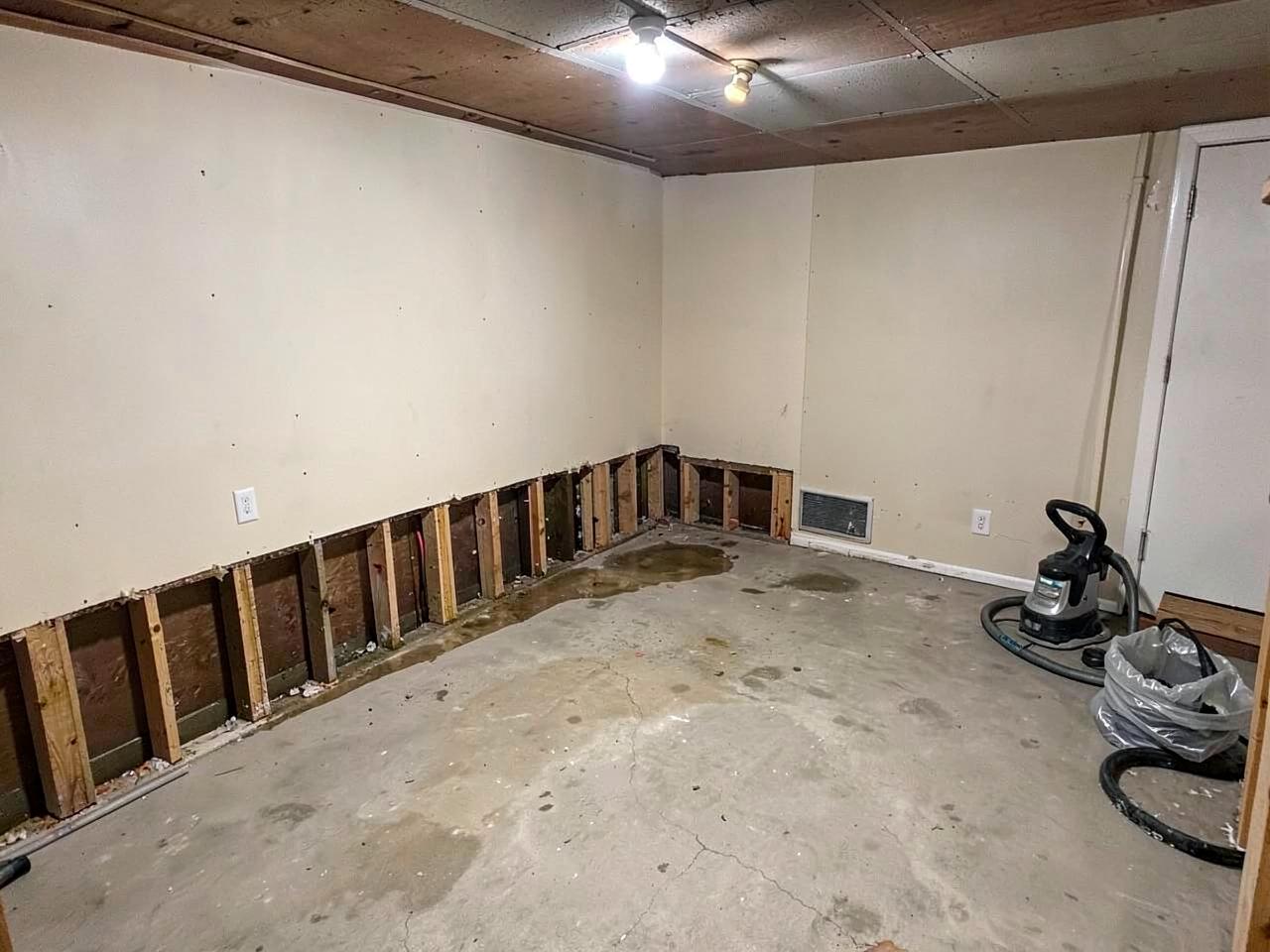
We begin with a safety check: confirming power is off to affected circuits and identifying whether the water is clean, grey or contaminated. Standing water is removed through water extraction. Wet contents are moved, sorted and documented. Saturated carpet, underpad, baseboards and the lower portion of drywall are removed where they cannot be dried in place. Air movers and dehumidifiers then dry the slab, framing and remaining materials with moisture readings tracked until completion.
If the flood involved sewer water, the work follows our sewage backup cleanup procedures, with additional removal, cleaning and sanitizing before drying.
Why professional cleanup matters
Basements hide moisture well. Concrete slabs hold water, insulation behind finished walls stays wet long after the surface dries, and stored items become a source of odour and microbial growth. A proper cleanup removes the water you can see and dries the structure you can't, so the basement can be safely rebuilt and used again.
Why choose Water Damage Mississauga
- Fast response to flooded basements anywhere in Mississauga.
- Careful handling and documentation of contents and damaged materials.
- Moisture detection to confirm walls, insulation and slab are actually dry.
- One team from water removal through to flood damage restoration.
Basement flooding across Mississauga neighbourhoods
Older areas such as Lakeview, Applewood, Cooksville and Malton include many homes with original weeping tile and no backwater valve, making them more vulnerable to storm-related flooding. Newer communities such as Churchill Meadows and Erin Mills tend to have fully finished lower levels, so the same volume of water causes more damage. Properties near the Credit River in Streetsville and Port Credit, and low-lying lots in Clarkson, also see elevated ground water after major rain events.
Frequently asked questions
Is it safe to go into a flooded basement?
Not until power to the area is confirmed off and you know the water is not contaminated. If the water may have come from a floor drain or sewer, stay out and let a professional handle it.
Can a finished basement be saved after a flood?
Framing and slab can almost always be dried. Drywall, carpet and underpad often need to be partially or fully replaced, particularly if the water sat for more than a day or was contaminated.
How can I reduce the chance of my basement flooding again?
Test your sump pump regularly and consider battery backup, extend downspouts away from the foundation, keep window wells clear, and ask a plumber about a backwater valve. The City of Mississauga and Region of Peel have information on basement flooding prevention programs.
This service is part of our complete water damage restoration in Mississauga.