Why sewer backups happen in Mississauga
- Municipal sewer surcharge during intense rainfall, pushing wastewater back through the lateral into the lowest fixtures.
- Tree root intrusion into older clay or concrete laterals, common in mature neighbourhoods like Mineola, Streetsville and Applewood.
- Blockages from grease, wipes and debris inside the private drain line.
- Collapsed or offset sewer pipes in aging housing stock.
- Missing or failed backwater valves that would otherwise stop reverse flow.
Signs of a sewer backup
- Water or waste coming up through a basement floor drain, shower or toilet.
- Gurgling sounds from drains when other fixtures are used.
- Multiple fixtures draining slowly at the same time.
- Sewer odour in the basement, especially after rain.
Our sewage cleanup process
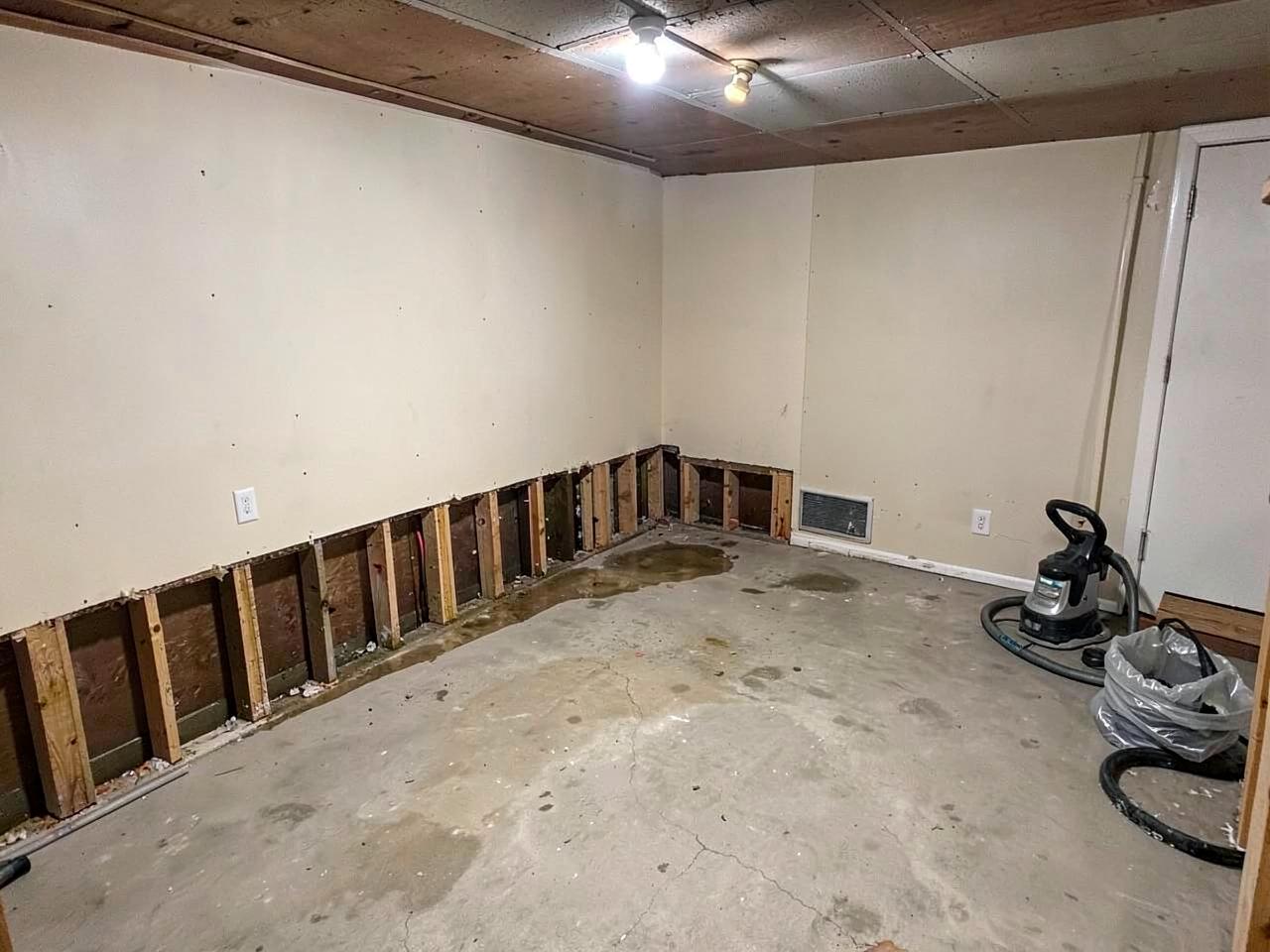
The first priority is containment: limiting foot traffic and cross-contamination between the affected area and the rest of the building. Standing wastewater is extracted, then porous materials that were in contact with it are removed and bagged. This commonly includes carpet, underpad, drywall, insulation, baseboards, cardboard and soft contents. Hard surfaces are cleaned and sanitized, and the area is dried with monitored equipment before any rebuilding takes place.
Because sewer backups most often affect the lowest level, this work frequently overlaps with basement flood cleanup and is followed by structural drying and restoration.
Why professional sewage cleanup matters
Sewage contains bacteria and other contaminants that should not be handled without appropriate protective equipment and procedures. Attempting to clean a backup with household products and a mop can spread contamination and leaves saturated materials in place. A professional cleanup removes what cannot be sanitized, treats the surfaces that remain and dries the structure, reducing lingering odour and the risk of ongoing problems. We do not make medical claims; if you have health concerns after exposure to sewage, consult a health professional.
Why choose Water Damage Mississauga
- Methodical containment and removal to limit the spread of contamination.
- Cleaning, sanitizing and drying carried out as one coordinated job.
- Documentation of removed materials and affected areas for your records.
- Local response throughout Mississauga.
Sewer backup cleanup across Mississauga
Areas of Mississauga with older sewer infrastructure, including Lakeview, Cooksville, Malton, Dixie and parts of Port Credit, see more frequent backups during storms. Newer areas are not immune: blocked laterals and pump failures affect properties of every age. The Region of Peel offers information on backwater valve subsidies and basement flooding prevention that property owners may find useful after a backup.
Frequently asked questions
What should I do right after a sewage backup?
Stop using water in the building so no more flows into the drain system, keep people and pets out of the affected area, and call for professional cleanup. Avoid running fans that could spread contaminated air through the house.
Can carpet be cleaned after a sewer backup?
No. Carpet, underpad and other porous materials that contacted sewage should be removed and disposed of rather than cleaned.
Will the smell go away?
Once contaminated materials are removed, surfaces are cleaned and sanitized and the structure is dried, lingering odour is typically resolved. Persistent odour usually points to material that was missed or is still wet.
This service is part of our complete water damage restoration in Mississauga.